
Categories
Real Estate TipsPublished March 10, 2026
The Housing for the 21st Century Act

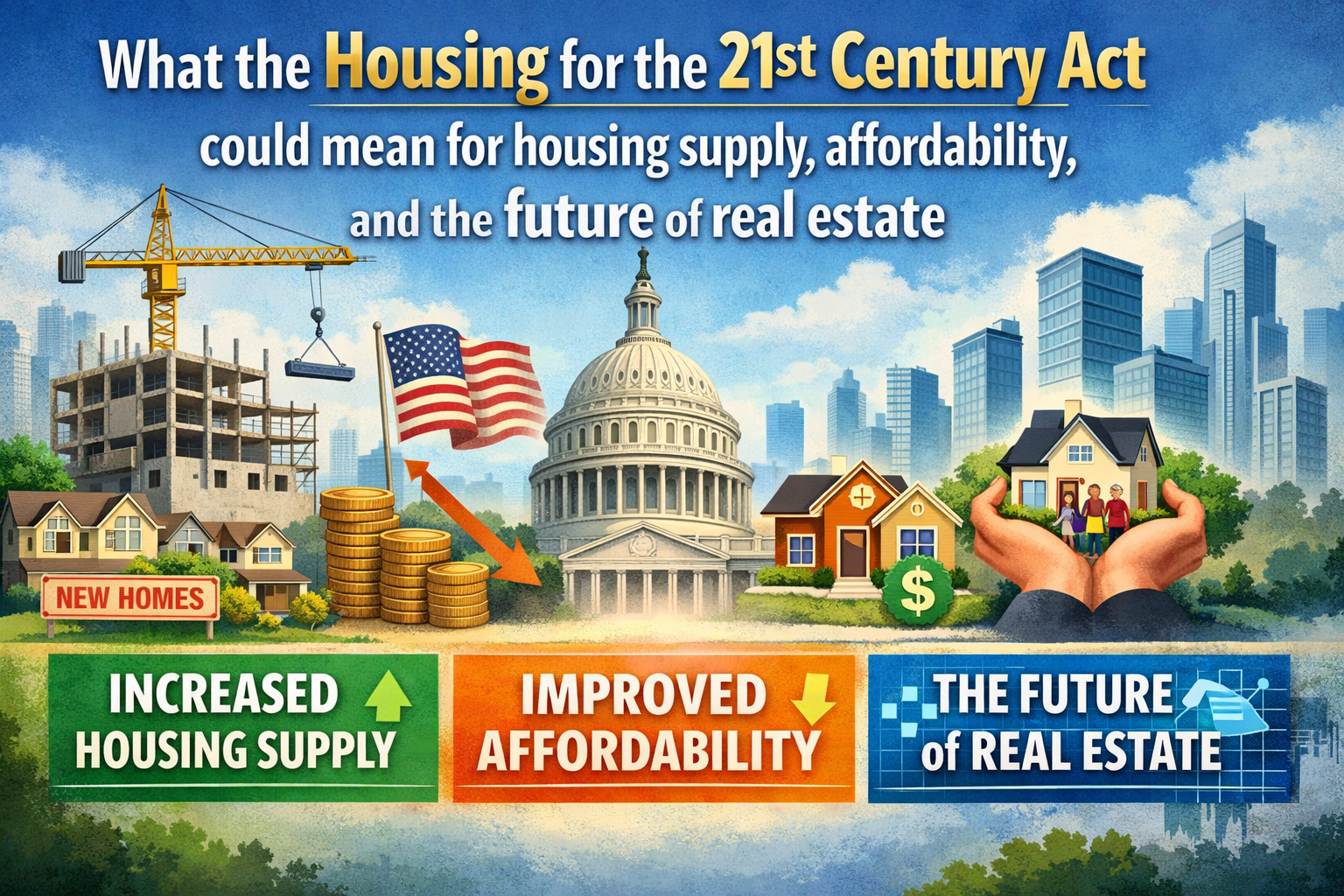
What the Housing for the 21st Century Act could mean for housing supply, affordability, and the future of real estate.

Every day we hear people talking about interest rates, inflation, and whether it’s a good time to buy or sell a home.Those things certainly matter. But there is another issue quietly sitting underneath all of it that doesn’t get talked about nearly enough.
We simply don’t have enough homes.
Across the United States, experts estimate that we are short millions of housing units. When supply is limited and demand remains strong, prices naturally rise. That shortage is one of the main reasons housing affordability has become such a challenge for so many families.
Recently, Congress passed a bipartisan bill called the Housing for the 21st Century Act. While it hasn’t received much attention in the headlines, the goal of the legislation is straightforward: make it easier to build more homes.
Let’s walk through what the bill is trying to accomplish and why it matters.
The Core Problem: America’s Housing Shortage
For years, the United States has not been building enough housing to keep up with population growth and household formation. After the 2008 housing crash, construction slowed dramatically and never fully caught up.
Several factors contribute to the shortage:
- Zoning and regulatory hurdles that slow development
- Rising construction costs and labor shortages
- Limited financing options for certain types of housing
- Community resistance to higher-density housing in some areas
The result is a supply gap that continues to put upward pressure on home prices and rents.
The Housing for the 21st Century Act is designed to address several of these issues at the federal level.
What the Housing for the 21st Century Act Does
The bill includes a range of policy changes intended to encourage housing production and reduce barriers to development. Some of the key elements include:
Modernizing Federal Housing Programs
Several existing housing programs are updated and expanded to make it easier for local governments and developers to access funding for housing projects.
These programs help communities build:
- Affordable housing
- Workforce housing
- Mixed-income developments
By modernizing these programs, the goal is to increase the number of projects that can move forward.
Reducing Bureaucratic Delays
One of the biggest challenges in housing development is the amount of time it takes to move a project from concept to construction.
The legislation includes efforts to streamline certain processes and reduce red tape that can delay projects for years.
When approvals happen faster, developers can:
- Reduce costs
- Build more efficiently
- Deliver housing to the market sooner
Encouraging More Investment in Housing
The bill also aims to attract more private investment into housing development, particularly for projects that serve middle-income and workforce households.
Financing has become a major obstacle for many housing projects, especially in markets with high land and construction costs.
Expanding financing tools can help unlock projects that otherwise wouldn’t pencil financially.
Supporting a Wider Range of Housing Types
Another focus of the legislation is making it easier to build a broader mix of housing types, including:
- Multifamily housing
- Manufactured housing
- Workforce housing
- Mixed-income developments
Expanding the types of housing that can be built is an important step toward addressing the supply gap.
What This Means for Housing Supply
Policies like this don’t change the housing market overnight. Real estate markets tend to move slowly, and new housing takes time to plan, approve, finance, and build.
However, the long-term goal is clear:
If we build more homes, housing becomes more attainable.
More supply can help relieve some of the pressure on:
- Home prices
- Rental costs
- Competition among buyers
Over time, increasing housing production is one of the most effective ways to improve affordability.
Why This Matters for California
In places like California and the Central Coast, housing supply is particularly constrained.
Limited land, strict zoning regulations, and high construction costs have made it difficult to build enough housing to meet demand. That imbalance has contributed to the high home prices we see today.
While federal legislation alone won’t solve the issue, policies that encourage housing development and reduce barriers can help move things in the right direction.
Our Perspective
As real estate professionals here on the Central Coast, we spend a lot of time thinking about the forces that shape the housing market.
Interest rates matter. Economic trends matter. But at the end of the day, one of the most important factors is simply how many homes are available.
When supply increases, the market becomes healthier and more accessible for buyers, renters, and homeowners alike.
It will be interesting to see how policies like the Housing for the 21st Century Act influence housing development in the years ahead.
Thinking About Buying or Investing?
If you’re curious about how housing supply, policy changes, and market trends might affect your real estate plans, we’re always happy to talk.
Whether you’re thinking about buying your first home, investing in property, or planning your next move, understanding the bigger picture can help you make better decisions.
Reach out anytime — we’d love to help.


Owen & Camille Schwaegerle
| The Schwaegerle Team
or another way